ReSpin featured in new circular textile report from the Stockholm School of Economics
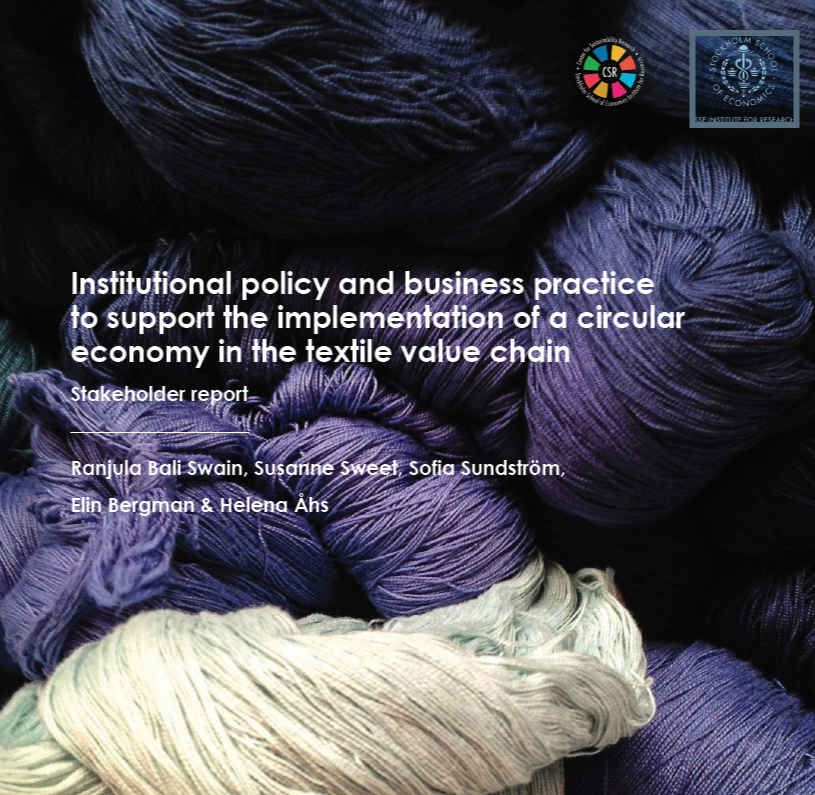
Report Cover
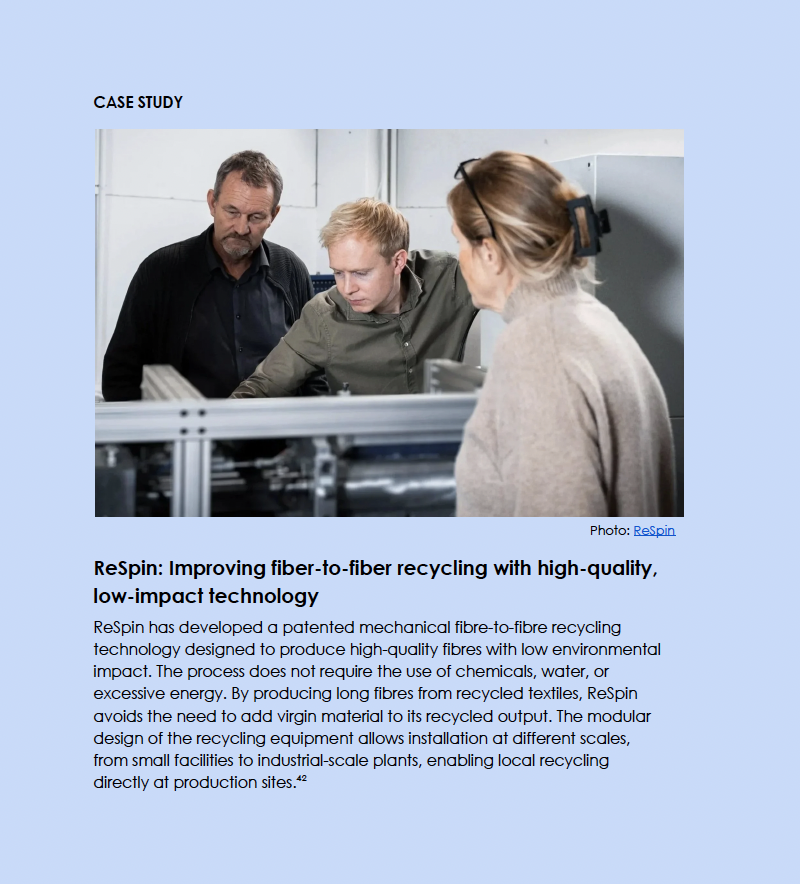
ReSpin is highlighted as a case study in a new report from the Stockholm School of Economics, examining how policy and business practices can support the transition to a circular textile value chain.
The report brings together research, policy analysis and stakeholder dialogue, with a focus on the European Union and Sweden. It identifies key structural barriers to circularity, such as infrastructure gaps, uneven investment risks, and fragmented governance, while also outlining opportunities in circular business models, digital transparency, and international collaboration.
Within this context, ReSpin is recognised for its fibre-to-fibre recycling technology. As described in the report:
“ReSpin has developed a mechanical fibre-to-fibre recycling technology designed to produce high-quality fibres with low environmental impact. The process does not require the use of chemicals, water, or excessive energy.”
The report also highlights how ReSpin’s modular approach enables local recycling directly at production sites, supporting scalable and economically viable circular systems.
In addition, the report provides a useful overview of upcoming EU regulations, such as Extended Producer Responsibility (EPR), Digital Product Passports, and Ecodesign requirements, shaping the future of the textile industry.